Pen and paper picking
Pickers worked from printed lists, one order at a time. As demand rose, that pace couldn't stretch, and orders backed up.
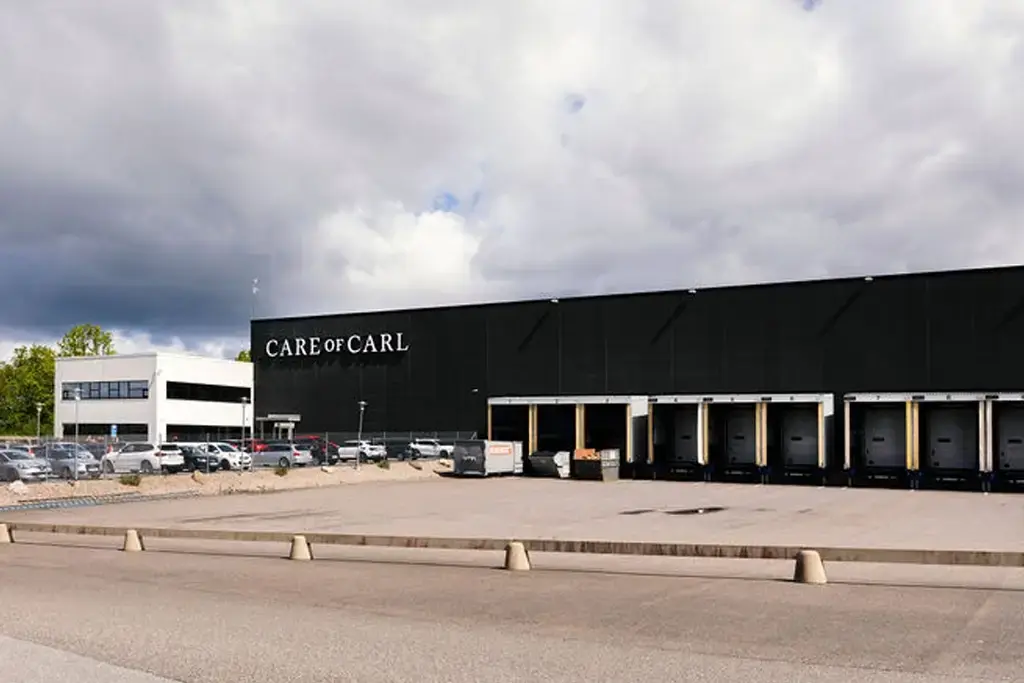
Care of Carl is a premium menswear retailer near Borås, selling across the EU online and through stores in five countries. Picking used to run on printed paper lists, and every transaction was double-checked by hand. On Bitlog WMS, the team scans, batch-picks, and moves faster, with 40% higher operational efficiency and 25% lower staffing costs.
“Before implementing Bitlog, our picking process was very manual. We relied on pen and paper.”

Care of Carl is an online menswear retailer built on quality, style, and personal service. From its headquarters and warehouse just outside Borås, it ships to customers across the EU and runs physical stores in Sweden, Norway, Denmark, Finland, and Germany.
As order volume climbed, the operation that got the business here, an ERP with an e-commerce module and picking off printed lists, started to strain. The warehouse needed to run faster without adding proportional headcount.
Pictured: Magnus Olsson, Head of Logistics, inside Care of Carl's Borås warehouse.

Care of Carl assessed what it actually needed: a warehouse system straightforward enough that anyone could pick, fast enough to implement without disrupting the business, and accurate enough to end the constant double-checking. Bitlog WMS fit the operation without forcing it to change how it worked.
The draw was ease of use as much as capability. A system the whole team could learn quickly meant the warehouse stopped depending on a handful of trained pickers. Scanning replaced manual verification, so accuracy came from the system, not from second-guessing.
"I highly recommend Bitlog for its quick implementation time, ease of understanding for staff, and for businesses like ours with fairly straightforward workflows, it is an extremely beneficial system to implement."
Magnus Olsson, Head of Logistics, Care of Carl

“When we have a lot to do in the warehouse and can't keep up, the office steps in to help with picking, for example. We were limited before when it was manual. Not everyone could handle it. With Bitlog, it's a breeze.”
Care of Carl moved its menswear warehouse from pen-and-paper picking to a fully scanned, barcode-driven operation on Bitlog WMS, and lifted operational efficiency by 40% while cutting staffing costs 25%.
The biggest change is who can do the work: because the system is simple enough to learn fast, picking is no longer limited to a few trained people, and office staff can step in when volume spikes.
Barcode scanning removed the constant double-checking, so accuracy comes from the system and returns stay precise down to the exact size.
With real-time and historical data, the team plans staffing and spots bottlenecks instead of reacting to them.
For a growing e-commerce retailer shipping across the EU, that's a warehouse that scales with demand rather than against it.

 Video
Hultafors Group 4 warehouses, 3 countries, 2 continents, one Bitlog WMS.
The full story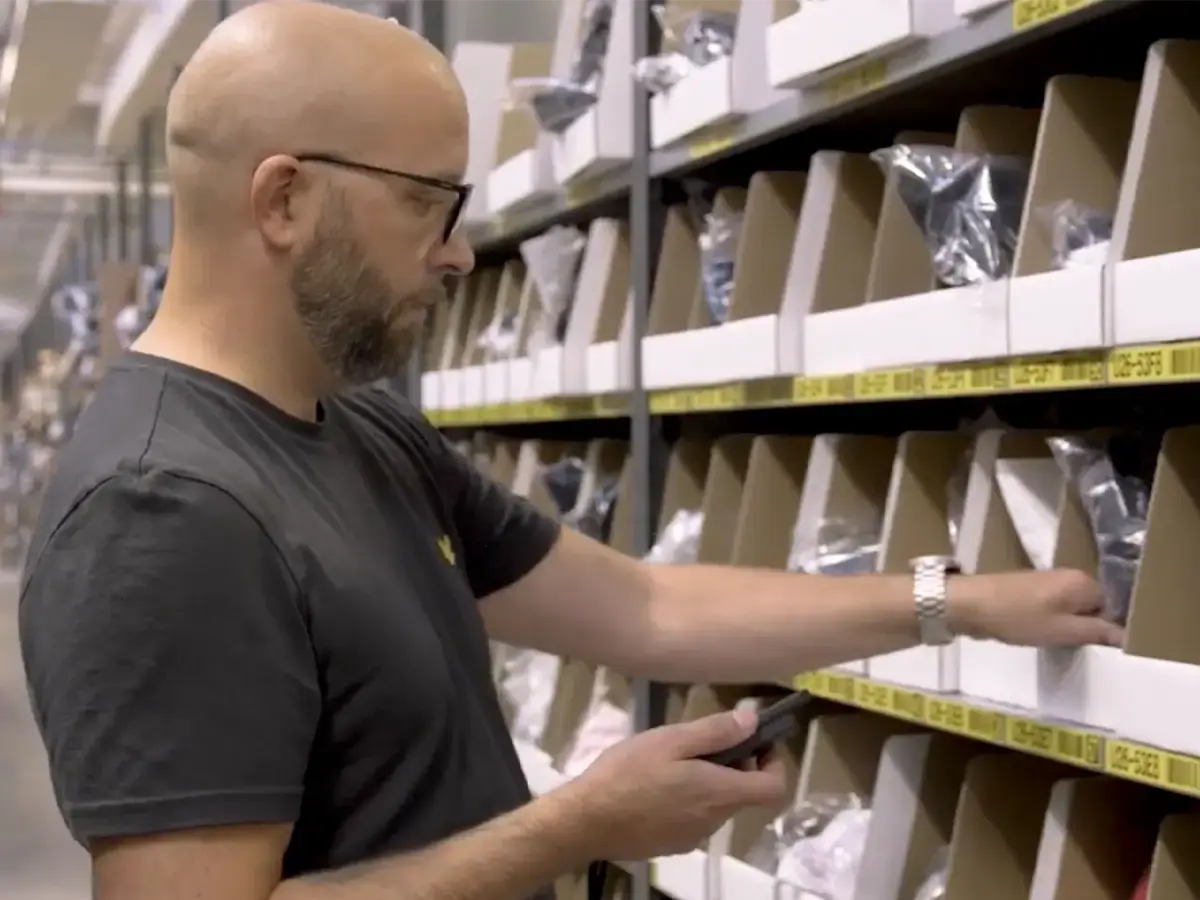 Video
Rapidly scaling their business alonside a WMS that grows with them.
The full story Video
25% YoY growth by growing their assortment and eliminating picking errors.
The full story